Structured Outputs & Function Calling: Beyond Chatbots
A practical guide to structured outputs and function calling—how to build AI agents that reliably update your CRM/CMS, with guardrails that stand up in production.
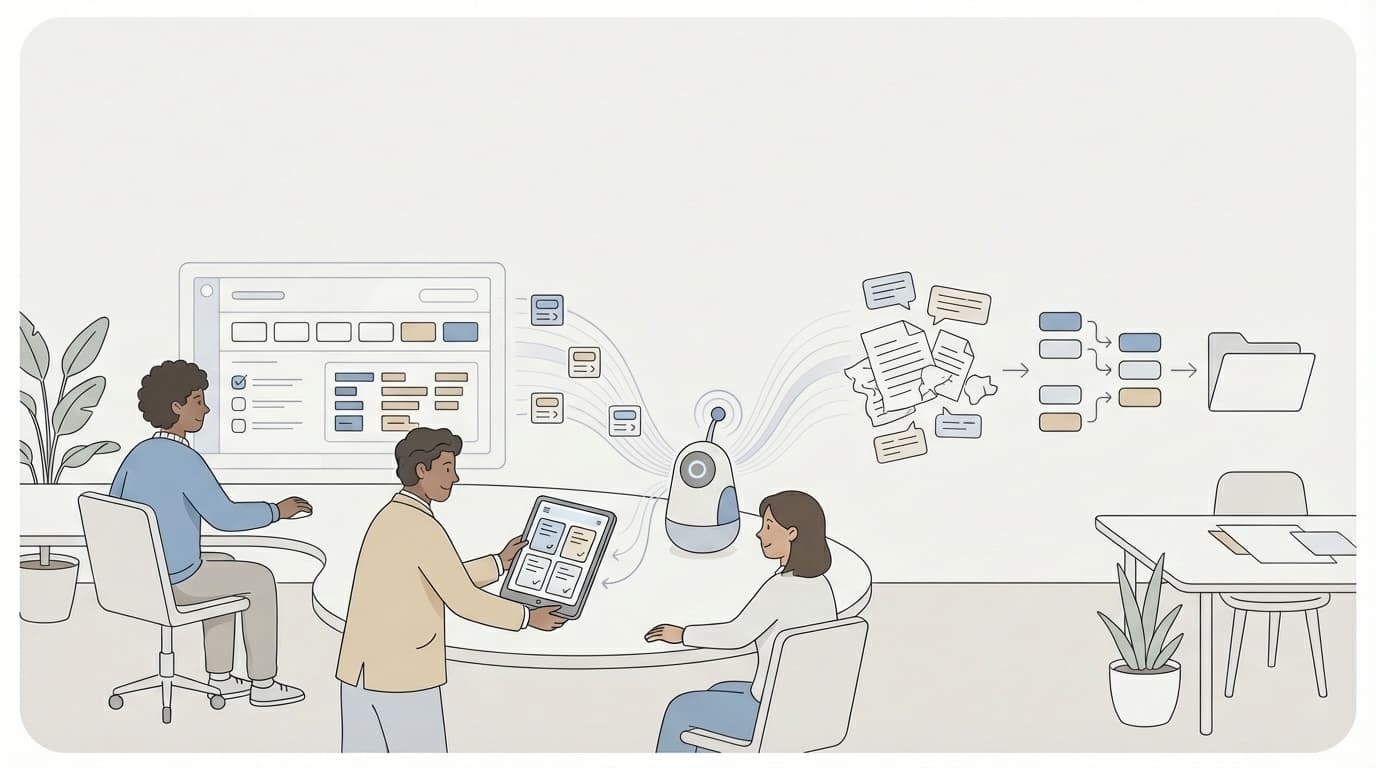
Most “AI chatbots” fail the first real test of enterprise value:
Can your model output be used by software—reliably—without a human cleaning it up?
If your answer is “sometimes,” you’re not alone. The gap between a helpful response and an operational workflow is almost always the same thing: structure.
In 2025, the best teams aren’t asking “Can the model answer questions?”
They’re asking:
- Can it return machine-readable output that fits our systems?
- Can it safely take actions (create tickets, update CRM fields, trigger follow-ups)?
- Can we audit what happened and why?
That’s where structured outputs and function calling come in.
The core idea: AI that produces events, not paragraphs
Chatbots produce text.
Enterprise systems run on events and records:
- A lead gets created (with required fields)
- A ticket gets opened (with category, severity, owner)
- A refund gets requested (with reason code, amount, policy references)
- A follow-up gets scheduled (with consent, channel, timing)
Structured outputs and function calling are the two patterns that convert “AI said something” into “the system did something.”
Pattern 1: Structured outputs (a schema for the model’s response)
Structured outputs mean the model must respond in a specific structure—typically a JSON Schema you define.
This matters because it turns your model into a predictable component in a larger workflow:
- Your backend can validate the output.
- Your UI can render it safely.
- Your analytics can store it consistently.
If you’ve ever had a model rename "priority" to "urgency" (or switch data types unexpectedly), you already know why this is not a nice-to-have.
Best used when:
You want the model to produce a clean record your system will handle (triage, summarization, extraction, routing decisions, compliance-ready logs).
Further reading:
- OpenAI: Structured Outputs guide — https://platform.openai.com/docs/guides/structured-outputs
- OpenAI: Introducing Structured Outputs — https://openai.com/index/introducing-structured-outputs-in-the-api/
- Azure OpenAI: Structured outputs overview — https://learn.microsoft.com/en-us/azure/ai-foundry/openai/how-to/structured-outputs?view=foundry-classic
Pattern 2: Function calling (tool use for real actions)
Function calling (aka tool calling) is when the model:
- decides which tool/function to use, and
- returns the arguments in a structured payload, so your application can execute the action.
Examples:
lookup_customer(email)create_ticket(subject, category, severity, transcript_url)update_crm_contact(contact_id, fields)schedule_followup(contact_id, channel, time_window, consent_status)
Best used when:
You want the model to interact with systems (CRM, CMS, ticketing, scheduling, knowledge bases), not just describe what should happen.
Further reading:
- OpenAI Structured Outputs guide (tool calling vs response schemas) — https://platform.openai.com/docs/guides/structured-outputs
- Gemini: Function calling docs — https://ai.google.dev/gemini-api/docs/function-calling
The mistake teams make: treating these as “either/or”
In production, the most reliable pattern is often:
- Tool calls for reads/writes (function calling)
- A final structured response for logging + handoff (structured outputs)
That gives you both:
- Actionability (do the work)
- Auditability (store a clean, queryable record of what happened)
A practical example: Support chat → CRM update + ticket creation
Let’s say a customer messages:
“I’m going to cancel. I was billed twice and support hasn’t fixed it.”
A robust workflow looks like this:
Step A: Retrieve facts (read tools)
- Call
lookup_customer()to fetch:- plan, status, account age, open invoices, last 3 tickets
Step B: Decide and act (write tools with guardrails)
- Call
create_ticket()with:- category =
"billing_dispute" - severity =
"high" - routing =
"billing_queue"
- category =
Optionally:
- Call
draft_followup_email()with a compliant template - Call
add_crm_note()to preserve context
Step C: Return a structured “case record” (for dashboards + handoffs)
Your model should return something like:
{
  "customer_id": "C-10492",
  "primary_issue": "double_billing",
  "intent": "cancel_risk",
  "recommended_next_action": "billing_resolution_within_24h",
  "confidence": 0.86,
  "ticket": {
    "created": true,
    "ticket_id": "T-88213",
    "queue": "billing_queue",
    "severity": "high"
  },
  "customer_message_summary": "Customer reports double billing and is threatening cancellation.",
  "notes_for_human_agent": [
    "Confirm duplicate charge IDs and refund policy.",
    "Acknowledge frustration; provide timeline and next update time."
  ]
}
This is what makes downstream automation possible:
- dashboards and analytics
- QA and compliance review
- smoother human handoffs
- consistent CRM hygiene
The production checklist (this is where qualified teams win)
If your goal is a system that generates revenue outcomes (deflection, conversion, booked meetings, retention), not a demo, use this checklist.
Production Checklist (Interactive)
Tap to track readiness. Expand details for implementation hints.
Schemas & Contracts
Validation & Fallbacks
Execution Safety
Reliability & Dedupe
Observability
Audit & Governance
1) Treat schemas like APIs (version them)
- Name your schema versions (
case_record_v1) - Make required fields explicit
- Avoid “optional everything”
- Disallow unexpected fields when you can
2) Validate hard, fail safely
- Validate JSON against schema
- If invalid: retry with a constrained repair prompt
- If still invalid: fall back to a human-in-the-loop path
3) Separate “decide” from “execute”
A safe enterprise pattern:
-
Model proposes an action + parameters
-
Your orchestrator checks:
- permissions
- budgets (refund limits, write access)
- policy constraints
-
Then executes
4) Make write actions idempotent
For anything that creates or changes records:
- use idempotency keys
- protect against duplicate tool calls
- log every action
5) Instrument what matters
Track:
- schema validation failure rate
- tool call error rate
- time-to-first-action
- handoff rate to humans
- resolution and conversion outcomes
6) Build audit trails from day one
Store:
- tool call name + arguments
- tool results (redacted as needed)
- the final structured output
- the policy/rules that allowed the action
This is how you scale across teams and geographies without losing trust.
Where Karmaflow fits
Karmaflow is built around a simple principle:
Turn conversations into structured, measurable outcomes—across channels—without sacrificing governance.
If you’re exploring “beyond chatbots,” these are good next reads:
-
Conversation analytics + graphs (how context becomes queryable) /blog/analytics/conversation-qualitative-analysis
-
Prompts → dashboards (how outputs become measurable KPIs) /blog/prompts-to-dashboards
-
Case studies (see workflows that convert and deflect) /blog?category=case-studies
-
Voice agent lead qualification case study /blog/tcc-canada-voice-agent-tours
If you want this implemented fast (templates + blueprint)
If you’re building:
- support deflection + escalation
- lead qualification + booking
- CRM hygiene automation
- multi-channel follow-ups (email/SMS/voice)
…you’ll move faster with proven assets:
- JSON Schema templates for common CX workflows
- tool definitions + permissioning patterns
- rollout checklist (pilot → production)
- evaluation metrics that map to revenue outcomes
Start with the case studies above, then talk to the team about your workflow and stack.
- Structured outputs
- Function calling
- Tool calling
- AI agents
- CRM integration
- CMS automation
- Enterprise AI